

Civic Intelligence Unit
The Constitutional Accountability Scorecard
See how candidates actually behave when constitutional guardrails are tested
Measure the record—not the rhetoric
Click to enlarge poster
North Carolina Friends: You’re Invited to an Important Conversation About the 2026 Election
Why Constitutional Accountability Matters in 2026
Join us to learn about the Civic Intelligence Unit’s research and Constitutional Accountability Scorecards. We’ll share original research on independent-minded voters, preview our 2026 Constitutional Accountability Scorecards, and discuss why constitutional accountability matters in the 2026 election.
Evidence Over Ideology
The Civic Intelligence Unit (CIU) is a nonpartisan research and public-education initiative focused on how public officials exercise power when constitutional guardrails are tested.
We develop clear, evidence-based tools to help independent and moderate voters assess whether public officials’ power is being exercised with restraint, accountability, and respect for constitutional norms.
Our work does not advocate for parties or candidates. It evaluates conduct, process, and institutional behavior using objective, transparent standards and publicly verifiable evidence.
What We Do
-
![]()
Research & Indices
We develop clear, evidence-based frameworks – including The Constitutional Accountability Scorecard - that organize complex political behavior into measurable standards.
-
![]()
Public Scorecards
We present candidate and officeholder assessments in a format that is clear, comparable and easy to use.
-
![]()
Civic Clarity
We help independent and moderate voters cut through partisan noise and focus on what public officials actually do.



Nearly Half of Americans Identify as Independent
U.S. Political Party Identification, 2025
Why Independents Matter
Independents are now the largest voting bloc in the country—45% of the electorate, according to Gallup.¹
But most political analysis still assumes voters think in partisan terms.
That leaves many voters without tools that match how they actually evaluate politics: by conduct, not slogans; by restraint, not rhetoric; and by whether institutions function as intended.
CIU exists to close that gap.
¹ Gallup, New High of 45% in U.S. Identify as Political Independents, January 12, 2026.
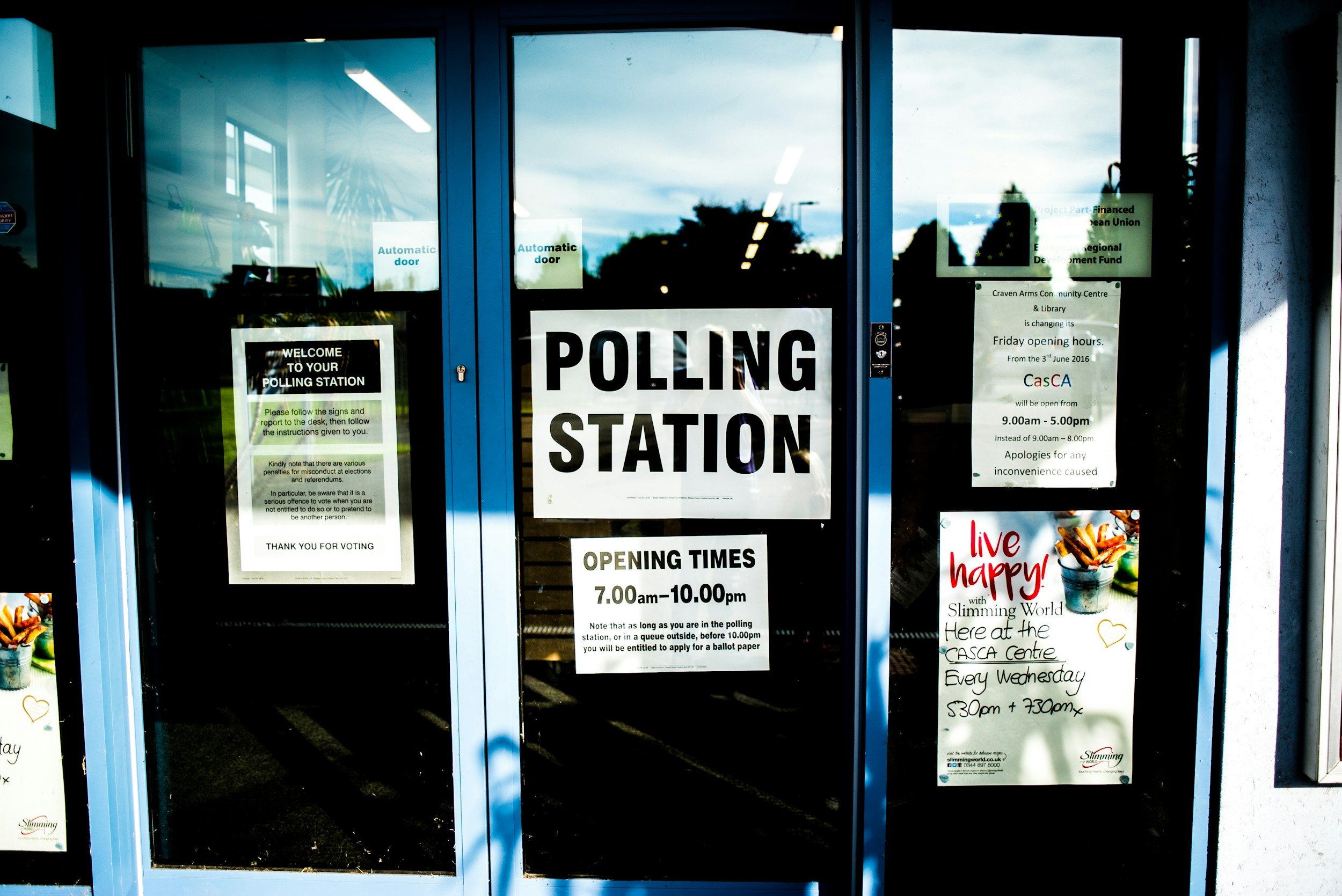
Why America’s Largest Voting BlocMatters:
Understanding How Independent Voters Evaluate Public Officials
Independent voters are now the largest political bloc in the United States, representing roughly 45% of voting age Americans. Yet they are often misunderstood as simply being "between" Democrats and Republicans. In reality, independents are a diverse group united less by ideology than by how they evaluate government, public officials, and institutions.
Many independent-minded voters place a high value on accountability, fairness, competence, and practical outcomes. They are often skeptical of political parties, resistant to ideological extremes, and more likely to judge public officials based on conduct rather than rhetoric.
While independents share certain broad characteristics, they are not a single voting bloc. Some prioritize institutional stability and constitutional norms, while others focus more on government performance, corruption, accountability, or practical day-to-day concerns.
To better understand these differences, CIU developed a framework that identifies four major independent-minded voter segments: Institutional Moderates, Civic Skeptics, Low-Engagement Independents, and Anti-Institutional Populists. Each group approaches politics differently, but all provide important insight into how independent-minded Americans evaluate public leadership.
Understanding these voters is central to CIU's mission. Our Constitutional Accountability Scorecards help citizens evaluate public officials using consistent, evidence-based standards focused on constitutional accountability rather than partisan affiliation.
The SAVE Act: Balancing Election Integrity and Voter Access
The Civic Intelligence Unit evaluates election-related legislation through a constitutional and governance framework that weighs both election integrity and lawful voter access. The debate surrounding the SAVE Act is therefore not whether unlawful voting should be prevented — it should be — but whether the proposed remedy strikes an appropriate balance between preventing unlawful voting and preserving access for eligible voters.
Current federal law already prohibits noncitizens from voting in federal elections, and existing audits, election reviews, and fraud databases have identified relatively limited numbers of confirmed noncitizen voting cases compared with the total number of ballots cast nationally. Public opinion surveys consistently show strong support for voter identification requirements, with a recent Pew Research Center survey finding that 83% of Americans support requiring government-issued photo identification to vote.
Research reviewed by CIU suggests the legislation could create substantial documentation, registration, and administrative burdens for millions of eligible voters, particularly younger voters, lower-income populations, disabled voters, and individuals lacking readily accessible citizenship documentation. Because the legislation implicates both election integrity and constitutional access to the ballot, CIU evaluates public support for the SAVE Act through the lens of proportionality, evidence-based governance, administrative feasibility, and practical democratic impact.
Under that framework, public support for the SAVE Act may weigh significantly negatively in CIU constitutional election-integrity assessments.
Full analysis includes research and source material from CRS, GAO, NBER, Bipartisan Policy Center, Heritage Foundation, Cato Institute, Brennan Center, and other institutional sources..